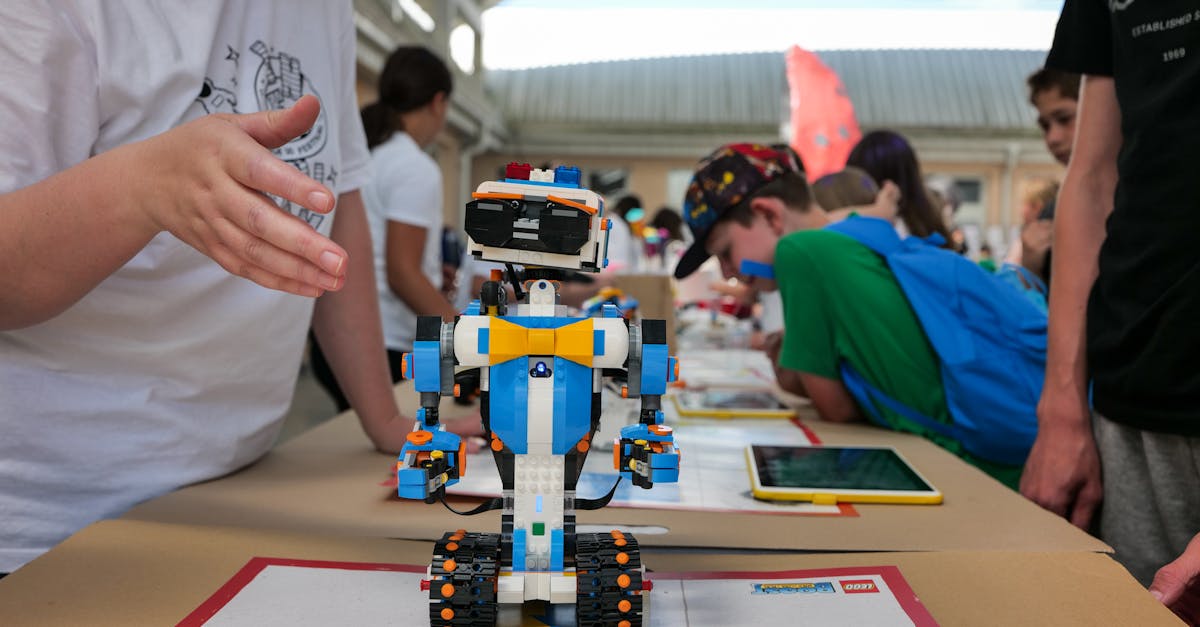


Artificial intelligence shifted from a hopeful breakthrough to an urgent global flashpoint in 2025, rapidly transforming economies, politics and everyday life far faster than most expected, turning a burst of tech acceleration into a worldwide debate over power, productivity and accountability.
How AI transformed the world in 2025 and what the future may bring
The year 2025 will be remembered as the moment artificial intelligence stopped being perceived as a future disruptor and became an unavoidable present force. While previous years introduced powerful tools and eye-catching breakthroughs, this period marked the transition from experimentation to systemic impact. Governments, businesses and citizens alike were forced to confront not only what AI can do, but what it should do, and at what cost.
From corporate offices to educational halls, from global finance to the creative sector, AI reshaped routines, perceptions and even underlying social agreements, moving the debate from whether AI might transform the world to how rapidly societies could adjust while staying in command of that transformation.
Progressing from cutting-edge ideas to vital infrastructure
In 2025, one key attribute of AI was its evolution into essential infrastructure, as large language models, predictive platforms and generative technologies moved beyond tech firms and research institutions to become woven into logistics, healthcare, customer support, education and public administration.
Corporations accelerated adoption not simply to gain a competitive edge, but to remain viable. AI-driven automation streamlined operations, reduced costs and improved decision-making at scale. In many industries, refusing to integrate AI was no longer a strategic choice but a liability.
At the same time, this deep integration exposed new vulnerabilities. System failures, biased outputs and opaque decision processes carried real-world consequences, forcing organizations to rethink governance, accountability and oversight in ways that had not been necessary with traditional software.
Economic upheaval and what lies ahead for the workforce
Few areas felt the shockwaves of AI’s rise as acutely as the labor market. In 2025, the impact on employment became impossible to ignore. While AI created new roles in data science, ethics, model supervision and systems integration, it also displaced or transformed millions of existing jobs.
White-collar professions once viewed as largely shielded from automation, such as legal research, marketing, accounting and journalism, underwent swift transformation as workflows were reorganized. Tasks that previously demanded hours of human involvement were now finished within minutes through AI support, redirecting the value of human labor toward strategy, discernment and creative insight.
This shift reignited discussions about reskilling, lifelong learning, and the strength of social safety nets, as governments and companies rolled out training programs while rapid change frequently surpassed their ability to adapt, creating mounting friction between rising productivity and societal stability and underscoring the importance of proactive workforce policies.
Regulation struggles to keep pace
As AI’s reach widened, regulatory systems often lagged behind. By 2025, policymakers worldwide were mostly responding to rapid advances instead of steering them. Although several regions rolled out broad AI oversight measures emphasizing transparency, data privacy, and risk categorization, their enforcement stayed inconsistent.
The global nature of AI further complicated regulation. Models developed in one country were deployed across borders, raising questions about jurisdiction, liability and cultural norms. What constituted acceptable use in one society could be considered harmful or unethical in another.
This regulatory fragmentation created uncertainty for businesses and consumers alike. Calls for international cooperation grew louder, with experts warning that without shared standards, AI could deepen geopolitical divisions rather than bridge them.
Credibility, impartiality, and ethical responsibility
Public trust became recognized in 2025 as one of the AI ecosystem’s most delicate pillars, as notable cases of biased algorithms, misleading information and flawed automated decisions steadily weakened confidence, especially when systems functioned without transparent explanations.
Concerns about fairness and discrimination intensified as AI systems influenced hiring, lending, policing and access to services. Even when unintended, biased outcomes exposed historical inequalities embedded in training data, prompting renewed scrutiny of how AI learns and whom it serves.
In response, organizations increasingly invested in ethical AI frameworks, independent audits and explainability tools. Yet critics argued that voluntary measures were insufficient, emphasizing the need for enforceable standards and meaningful consequences for misuse.
Creativity, culture and the human role
Beyond economics and policy, AI profoundly reshaped culture and creativity in 2025. Generative systems capable of producing music, art, video and text at scale challenged traditional notions of authorship and originality. Creative professionals grappled with a paradox: AI tools enhanced productivity while simultaneously threatening livelihoods.
Legal disputes over intellectual property intensified as creators questioned whether AI models trained on existing works constituted fair use or exploitation. Cultural institutions, publishers and entertainment companies were forced to redefine value in an era where content could be generated instantly and endlessly.
At the same time, new forms of collaboration emerged. Many artists and writers embraced AI as a partner rather than a replacement, using it to explore ideas, iterate faster and reach new audiences. This coexistence highlighted a broader theme of 2025: AI’s impact depended less on its capabilities than on how humans chose to integrate it.
Geopolitics and the AI power race
AI evolved into a pivotal factor in geopolitical competition, and nations regarded AI leadership as a strategic necessity tied to economic expansion, military strength, and global influence; investments in compute infrastructure, talent, and domestic chip fabrication escalated, reflecting anxieties over technological dependence.
This competition fueled both innovation and tension. While collaboration on research continued in some areas, restrictions on technology transfer and data access increased. The risk of AI-driven arms races, cyber conflict and surveillance expansion became part of mainstream policy discussions.
For many smaller and developing nations, the situation grew especially urgent, as limited access to the resources needed to build sophisticated AI systems left them at risk of becoming reliant consumers rather than active contributors to the AI economy, a dynamic that could further intensify global disparities.
Education and the redefinition of learning
Education systems were forced to adapt rapidly in 2025. AI tools capable of tutoring, grading and content generation disrupted traditional teaching models. Schools and universities faced difficult questions about assessment, academic integrity and the role of educators.
Rather than banning AI outright, many institutions shifted toward teaching students how to work with it responsibly. Critical thinking, problem framing and ethical reasoning gained prominence, reflecting the understanding that factual recall was no longer the primary measure of knowledge.
This shift unfolded unevenly, though, as access to AI-supported learning differed greatly, prompting worries about an emerging digital divide. Individuals who received early exposure and direction secured notable benefits, underscoring how vital fair and balanced implementation is.
Ecological expenses and sustainability issues
The swift growth of AI infrastructure in 2025 brought new environmental concerns, as running and training massive models consumed significant energy and water, putting the ecological impact of digital technologies under scrutiny.
As sustainability rose to the forefront for both governments and investors, AI developers faced increasing demands to boost efficiency and offer clearer insight into their processes. Work to refine models, shift to renewable energy, and track ecological impact accelerated, yet critics maintained that expansion frequently outstripped efforts to curb its effects.
This tension underscored a broader challenge: balancing technological progress with environmental responsibility in a world already facing climate stress.
What comes next for AI
Looking ahead, the lessons of 2025 suggest that AI’s trajectory will be shaped as much by human choices as by technical breakthroughs. The coming years are likely to focus on consolidation rather than explosion, with emphasis on governance, integration and trust.
Advances in multimodal systems, personalized AI agents and domain-specific models are likely to persist, though they will be examined more closely, and organizations will emphasize dependability, security and alignment with human values rather than pursuing performance alone.
At the societal level, the key challenge will be ensuring that AI becomes a catalyst for shared progress rather than a driver of discord, a goal that calls for cooperation among sectors, disciplines and nations, along with the readiness to address difficult questions tied to authority, fairness and accountability.
A defining moment rather than an endpoint
AI did not simply “shake” the world in 2025; it redefined the terms of progress. The year marked a transition from novelty to necessity, from optimism to accountability. While the technology itself will continue to evolve, the deeper transformation lies in how societies choose to govern, distribute and live alongside it.
The next chapter of AI will not be written by algorithms alone. It will be shaped by policies enacted, values defended and decisions made in the wake of a year that revealed both the promise and the peril of intelligence at scale.