

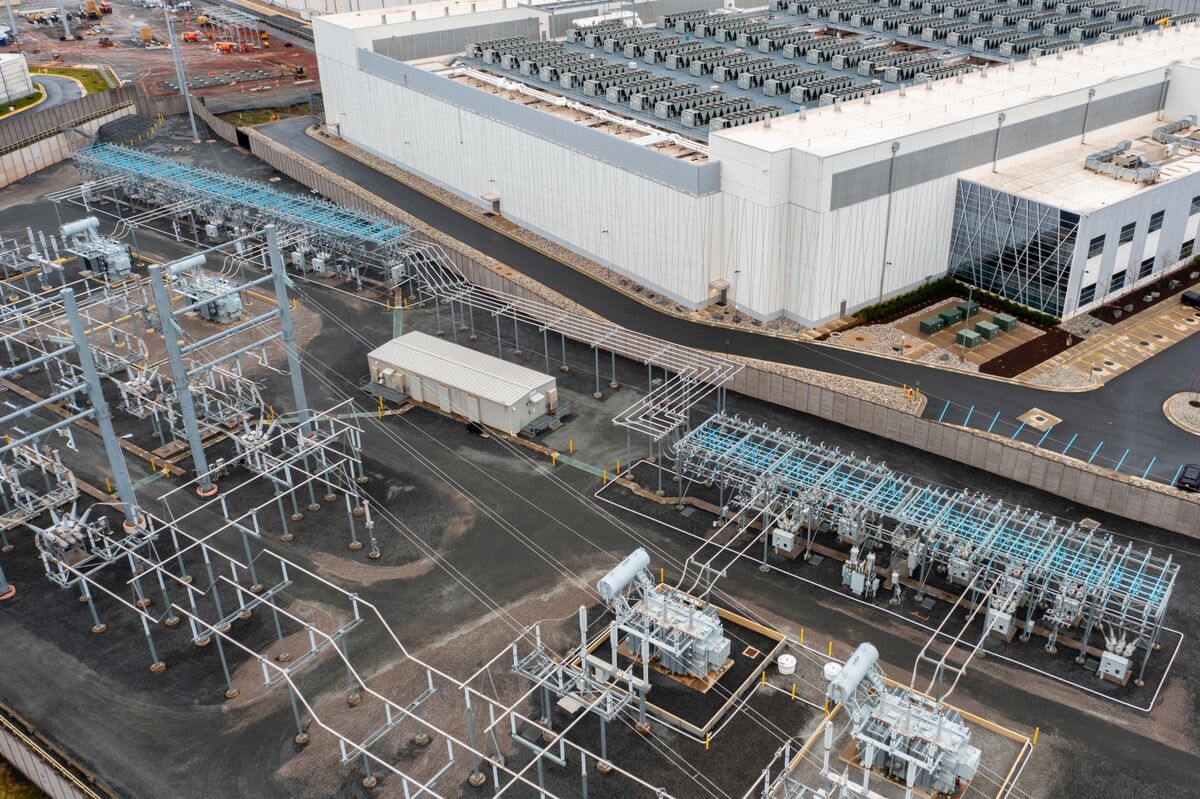
As electricity demand accelerates across the United States, a new proposal has pushed the energy consumption of leading technology companies into sharp focus, sparking a broader debate over infrastructure, expenses and responsibility. What began as a technical assessment of grid capacity has evolved into a political and economic matter with significant nationwide implications.
The administration of Donald Trump, alongside a group of governors from northeastern states, has urged PJM Interconnection, the largest power grid operator in the country, to consider holding an extraordinary electricity auction. The goal is to secure new, long-term energy generation while shifting more of the financial burden toward the technology companies driving unprecedented growth in electricity demand through large-scale data centers.
At the heart of this proposal is a shared worry among regulators, utilities, and consumers: the rapid expansion of artificial intelligence infrastructure is placing growing strain on an electrical grid that is already under pressure. Data centers, particularly those built for AI processing and cloud services, require immense and steady energy resources. As these facilities continue to spread throughout the Mid-Atlantic and northeastern regions, the cost of sustaining reliable power has climbed, and both households and small businesses are increasingly feeling the effects through higher utility bills.
A unique auction format designed with intent and a well‑defined purpose
Electricity auctions are not new within deregulated power markets. They are a routine mechanism used to balance projected demand with available supply, allowing utilities to purchase electricity from a mix of power producers, including natural gas plants, renewable facilities and other generators. Traditionally, these auctions focus on short-term needs, often covering one-year supply periods, and are open to a wide range of participants within the energy sector.
The proposal now being discussed departs significantly from that model. Instead of short contracts, the suggested auction would offer agreements spanning up to 15 years. Participation would be limited primarily to large technology companies that operate or plan to build data centers with exceptionally high energy requirements. Through competitive bidding, these companies would commit to financing electricity generation from newly constructed power plants, effectively reserving future capacity to meet their anticipated needs.
Supporters of the idea argue that such a structure could unlock billions of dollars in private investment, accelerating the construction of new power plants in regions served by PJM. In theory, this additional supply could stabilize the grid over the long term and help contain rising electricity prices for the roughly 67 million people who rely on the PJM network, which spans 13 states and the District of Columbia.
However, it should be recognized that neither the White House nor state governors possess the power to require PJM to carry out this auction. The grid operator operates autonomously under its own board and regulatory structure. Consequently, the proposal remains a request rather than an obligation, leaving open questions about if and in what manner it may advance.
Energy markets, deregulation and rising consumer costs
In order to grasp why this proposal has gained momentum, it is essential to consider how electricity markets have transformed over the past few decades. Previously, vertically integrated utilities produced the electricity they supplied, overseeing generation, transmission, and distribution within one unified system. Deregulation altered that framework by dividing generation from distribution and allowing independent power producers to enter the market.
Under this system, utilities secure electricity via auctions or contractual agreements, then deliver it to consumers at rates approved by state regulators. While regulators set the allowable charges, those prices largely reflect the expenses utilities incur when obtaining power on the open market. When demand increases faster than supply, costs escalate, and regulators frequently need to authorize higher rates to ensure reliable service.
The rapid rise of AI-focused data centers has intensified this momentum. Running around the clock, these sites consume vast quantities of electricity, comparable to that of small municipalities. Their concentration in specific states triggers cascading impacts on interconnected power grids, pushing costs higher even in areas experiencing minimal or no data center development.
Recent data underscores how extensively the issue has spread, with nationwide electricity prices rising by almost 7% over the past year according to the Consumer Price Index, pushing rates to nearly 30% above those seen at the close of 2021, while several PJM states have experienced even steeper jumps, where double‑digit surges in residential utility charges have placed added strain on household finances.
Notifications from the grid operator and risks of capacity shortfalls
Worries over constrained supplies intensified after PJM disclosed a significant shortfall in its latest capacity auction, the first instance in its history where the organization failed to acquire enough generation to meet projected demand for the mid-2027 to mid-2028 delivery period, as PJM reported that available resources would fall more than 5% below requirements, a deficit that unsettled policymakers and energy analysts.
The grid operator largely linked this imbalance to the rapid surge in data center demand, and in a public statement released after the auction, PJM executives stressed that electricity use from these facilities continues to grow faster than new generation resources can be brought online. They indicated that tackling the issue would demand coordinated efforts among utilities, regulators, federal and state authorities, and the data center industry itself.
Although PJM acknowledges the problem, it has expressed caution regarding the proposed emergency auction, emphasizing that it had not been informed beforehand about the White House announcement. The organization highlighted that any decision should align with the findings of the comprehensive stakeholder process already underway, a process that has been examining how to integrate substantial new demands, including data centers, into the grid while maintaining both reliability and fairness.
PJM’s response underscores a key conflict in the discussion: policymakers push for rapid fixes to escalating costs and growing capacity risks, while grid operators must weigh those demands against technical, regulatory and market factors that cannot be addressed immediately.
Political pressures and the shifting duties of technology companies
From the administration’s viewpoint, the proposal is portrayed as part of a wider initiative aimed at preventing everyday consumers from bearing the financial burden of infrastructure designed chiefly for corporate use. Senior officials, in their public comments, have characterized energy as fundamental to economic stability, emphasizing how dependable and reasonably priced electricity supports inflation management and helps keep overall living costs in check.
White House statements have emphasized that long-term solutions are necessary to protect households in the Mid-Atlantic and northeastern regions from continued price increases. By encouraging technology companies to finance new generation directly, the administration aims to align responsibility with consumption, ensuring that those driving demand contribute proportionally to expanding supply.
This stance has been echoed by some state leaders, particularly in areas experiencing rapid data center growth. In states like Virginia, which has become a hub for data infrastructure, utilities have already announced significant rate increases, intensifying political scrutiny.
Technology companies have increasingly acknowledged the problem. Several have made public pledges to shoulder rising electricity expenses in the regions where their data centers operate and to contribute funds for essential grid enhancements. Microsoft, for instance, has indicated its willingness to pay higher energy rates and to invest in infrastructure upgrades that sustain its operations. These voluntary actions reflect a growing understanding across the industry that energy limitations carry significant financial and reputational implications.
Extended timelines and unpredictable results
Even if PJM ultimately implements some form of the proposed auction, experts warn that swift improvements are unlikely. Developing new power plants powered by natural gas, renewable energy, or other technologies requires extensive permitting, financing, and construction work. Industry specialists note that adding substantial new capacity usually demands at least five years before it becomes operational.
As a result, the primary benefit of a long-term auction would be to limit future price increases rather than reduce current rates. By securing supply well in advance, the grid could avoid more severe shortages later in the decade, when data center demand is projected to grow even further.
Analysts also observe that several aspects are still unsettled, such as how expenses would be distributed, which types of generation assets would be eligible, and the manner in which risks would be divided between developers and corporate purchasers, and these open questions hinder any clear forecast of the exact effects on consumer costs or overall market behavior.
Nevertheless, the discussion itself signals a shift in how policymakers are approaching the intersection of technology growth and energy policy. Rather than treating rising electricity demand as an abstract market outcome, the focus is increasingly on accountability and long-term planning.
A wider reassessment of energy and infrastructure
The debate surrounding the proposed PJM auction underscores a larger transformation taking place across the United States, as the swift expansion of AI, cloud technologies and digital services refocuses attention on the physical infrastructure that supports them. Data centers may function in the digital sphere, but their power consumption is undeniably concrete, producing effects that extend well past the boundaries of corporate balance sheets.
Communities have voiced worries not only about rising utility costs, but also about the environmental footprint, land demands, and water usage tied to large-scale data centers. Meanwhile, workers and local officials are contending with concerns that automation and AI may reshape job landscapes, adding further complexity to public opinion.
Amid these conditions, the administration’s move to involve technology companies more directly in funding energy infrastructure signals an attempt to rebalance both expenses and rewards, and whether this unfolds through auctions, negotiated arrangements, or regulatory tweaks, the core question endures: how can the nation encourage technological advancement while maintaining affordable, reliable service for everyday consumers?
As PJM considers its upcoming decisions and stakeholders assess the proposal, the results are poised to steer broader energy policy debates far outside the Mid-Atlantic. Coordinating swift technological expansion with dependable, cost-effective power is not a challenge limited to one area. It is a nationwide concern, and the decisions taken today could define the grid’s direction for many years.

:max_bytes(150000):strip_icc()/Istanbul-Yeni-Camii-mosque-FT-MAG-0225-514497e0284d4f0389861b37e1d9a12e.jpg "Istanbul, in Turkey: What makes a retail concept scalable across diverse neighborhoods")


