
Defining the Signature Style of Nicolas Ghesquière at Louis Vuitton
Nicolas Ghesquière, as the Artistic Director of Louis Vuitton’s women’s collections since 2013, has imprinted a distinct and innovative style upon the historic French house. His vision for Louis Vuitton bridges heritage with hyper-modernity, shaping an era characterized by daring experimentation, futuristic silhouettes, and a deep sense of storytelling rooted in references to diverse eras and cultures. To fully understand what style defines Nicolas Ghesquière at Louis Vuitton, it is essential to delve into his key aesthetic pillars, notable collections, and the cultural and technical evolutions he has brought to the maison.
Reimagining Heritage Through Forward-Looking Lenses
Ghesquière’s approach to Louis Vuitton centers on a dynamic duality, balancing heritage with forward-looking design. He regularly taps into the house’s rich legacy, weaving in elements such as the iconic monogram and trunk-inspired details, while simultaneously pushing boundaries through innovative structures, materials, and creative references. His collections frequently reinterpret classic Louis Vuitton hallmarks within contemporary settings, producing pieces that reveal both subtle reflections of the brand’s origins and the energetic drive of fashion’s future.
A notable illustration appears in his repeated inclusion of motorcycle jackets and broad-shouldered blazers, garments that evoke the power dressing of the 1980s while being reimagined in forward-looking materials like neoprene or reflective textiles. In the Spring/Summer 2016 collection, he combined brocades recalling 18th-century upholstery with digitally rendered graphics, capturing his hallmark fusion of diverse periods and aesthetics.
The Art of Contrast: Hybridization and Eclecticism
Central to Ghesquière’s style at Louis Vuitton is the concept of hybridization. He delights in creating unexpected contrasts—romanticism clashing with utilitarian elements, ornate embroidery combined with athletic silhouettes, or Victorian blouses styled with sci-fi inspired trousers. This eclecticism has defined much of his output and has led to collections that feel simultaneously nostalgic and avant-garde.
The Fall/Winter 2018 collection serves as an illustrative case. In this presentation, the models appeared in lavishly adorned garments with a vintage flair, featuring elements like flounced collars and mosaic-pattern skirts, unexpectedly matched with futuristic sneakers and shimmering metallic accessories. This blend of elevated and everyday pieces not only challenged conventional fashion hierarchies but also embodied Ghesquière’s view of clothing as a continual reimagining of personal identity.
Architectural Silhouettes and Technical Innovation
A dedicated observer of garment construction, Ghesquière often weaves pronounced architectural elements into his creations. The designer’s hallmark contours—defined shoulders, sculptural volumes, and tightly drawn, high-waisted profiles—echo his tenure at Balenciaga, while consistently being refreshed through advanced techniques at Louis Vuitton. For instance, the Autumn/Winter 2019 collection presented structured, color-block ensembles with an almost armor-like presence, fashioned from supple leather and pioneering bonded materials.
Technical mastery also reveals itself in his material selection, as Ghesquière explores innovative textile engineering that ranges from fused vinyl and sculpted plastics to intricately laser-cut lace. The Spring/Summer 2020 presentation, in particular, featured pieces crafted from repurposed materials, merging bold aesthetic exploration with sustainability initiatives that have become central to contemporary luxury brands.
Narrative-Inspired Collections and Global Cultural Intersections
Ghesquière’s era at Louis Vuitton is marked by an appreciation for cultural diversity and storytelling. Each collection is designed as a narrative, often referencing art, cinema, architecture, or a specific geographic inspiration. For instance, the Cruise 2017 collection was staged at the Niterói Contemporary Art Museum in Brazil, a location that influenced silhouettes and color palettes, resulting in abstract prints reminiscent of Oscar Niemeyer’s architecture and Brazilian modernist art.
Moreover, Ghesquière frequently collaborates with artists, utilizing their work as both print motifs and conceptual springboards. The Fall/Winter 2021 collection, for example, featured paintings by Italian artist Fornasetti emblazoned across garments, creating a dialogue between fashion and fine art.
Accessories: Pushing Innovation Far Beyond Clothing
Beyond ready-to-wear, Ghesquière’s reimagining of Louis Vuitton encompasses accessories, particularly bags and footwear. Introduced under his direction, pieces such as the Petite Malle bag directly reference the house’s luggage-making roots, transforming classic trunks into contemporary, wearable objets d’art. Similarly, the Archlight sneaker, with its futuristic, oversized sole, has become an emblem of his ability to blend comfort, functionality, and design innovation.
The Impact on Luxury Fashion and Brand Evolution
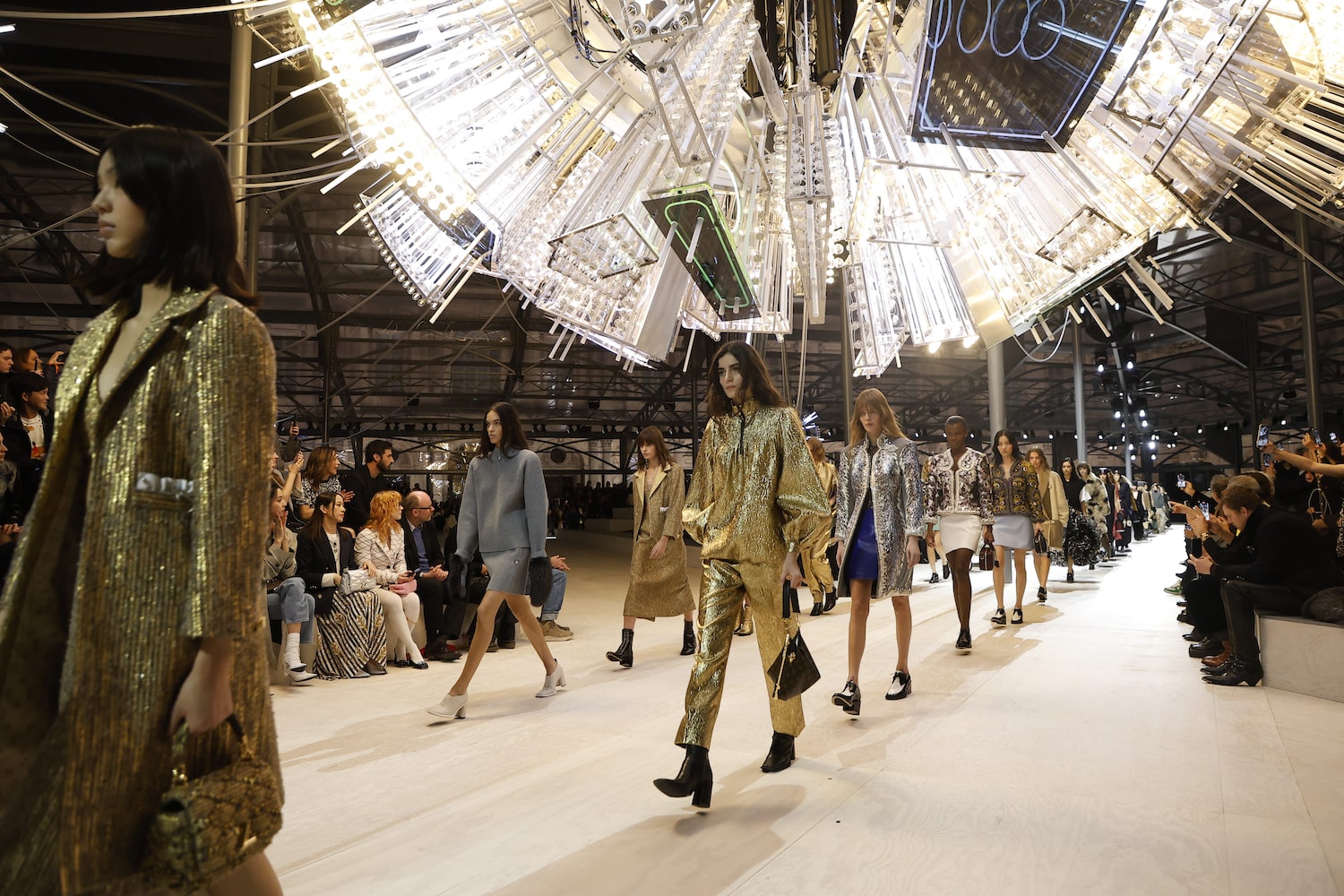
Ghesquière’s style at Louis Vuitton has accelerated the house’s evolution from storied leather goods maker to a force in contemporary luxury fashion. His collections have garnered critical acclaim, drawing new, younger audiences while respecting loyal clients’ expectations for both excellence and inventiveness. Under his leadership, Louis Vuitton’s women’s collections consistently drive conversation within the industry, highlighted by runway shows staged in architectural landmarks around the world and widely covered across digital and traditional media.
Nicolas Ghesquière’s work at Louis Vuitton is ultimately marked by his gift for reimagining the familiar, transforming established ideas into fresh expressions, weaving technology into traditional craftsmanship, and tempering the house’s legacy with a boldly future-focused edge. His singular visual approach has shaped Louis Vuitton’s identity throughout the twenty-first century while elevating the benchmark for creative direction across the luxury world. Under Ghesquière’s vision, fashion becomes a terrain where contrasts, narratives, and potential futures intersect, with every collection offering a renewed invitation to imagine what lies ahead.